Capital for the next move: matching funding to a clear use of funds

A competitor comes up for sale. A supplier offers a bulk stock deal for a limited time. The perfect second site becomes available. A large contract needs materials up front. In each case, the opportunity is ready before the cash is.
Capital for the next move is rarely about borrowing as much as possible. It is about matching the right type of funding to a clearly defined purpose, on terms the business can comfortably carry.
The short version
- The use of funds decides which funding fits.
- Working capital suits cash tied up in stock and debtors.
- Equipment and asset finance suit specific purchases.
- Business loans fund defined projects.
- Growth capital supports expansion.
- Private lending can move faster when timing or history make banks harder.
- Define the use of funds clearly, match it to the right funding and prepare the numbers early.
- NOIZE provides administrative support and business strategy.
- Where work is outside our skillset, or the law requires it, we make sure an appropriately qualified professional is involved.
Why use of funds comes first
Lenders want to know exactly what the money is for, because it tells them how it can be repaid and what risk they are taking. A clear use of funds also protects the business. It stops capital being spread across day-to-day costs and makes sure every dollar has a job.
The main types of business funding
01Working capital
Funding that releases cash tied up in stock, debtors or the gap between paying suppliers and being paid by customers.
02Equipment and asset finance
Funding for vehicles, machinery and equipment, usually secured against the asset.
03Business loans
Term loans for defined purposes, repaid over an agreed period.
04Growth capital
Funding for expansion: new sites, new markets, acquisitions or larger contracts.
05Commercial property loans
Funding to buy or develop business premises.
06Private lending
Non-bank funding that can move faster or suit situations banks decline, typically at a higher cost.
07Refinancing
Restructuring existing debt to improve terms or cash flow.
Matching funding to the job
- Short-term needs, short-term funding. Don't fund stock with a long-term loan, or a building with a short-term facility.
- Match repayments to returns. Repayments should be manageable from the income the investment produces.
- Consider speed and cost together. Faster funding often costs more. Use it when timing matters.
- Keep flexibility. Facilities that can be drawn as needed may suit uneven needs better than a lump sum.
> One of the best pieces of advice I ever got was simple: make your broker's life easy. Build a pack with everything relevant, collected and organised, with a cover page and the details laid out. The broker will love it, the lender will too, and they will both take you more seriously. Never forget you are dealing with people, and everyone likes it when you make their life easier.
“Things really got moving beyond our expectations.”
An illustrative example
Picture a manufacturer with three needs: a new machine, extra stock for a large order and a buffer for slower-paying customers. Rather than one large loan, the machine is funded through equipment finance, the stock through a working capital facility and the buffer through better collections. The total cost of funding falls and each facility matches its purpose.
Mistakes to avoid
- Don't borrow before defining the use of funds.
- Don't take the first offer without comparing options.
- Don't overlook the effect of repayments on cash flow.
Make your broker's life easy
Brokers and lenders are people, and people respond well to anyone who makes their job easier. When the business arrives with a complete, organised pack, the conversation starts on the right foot.
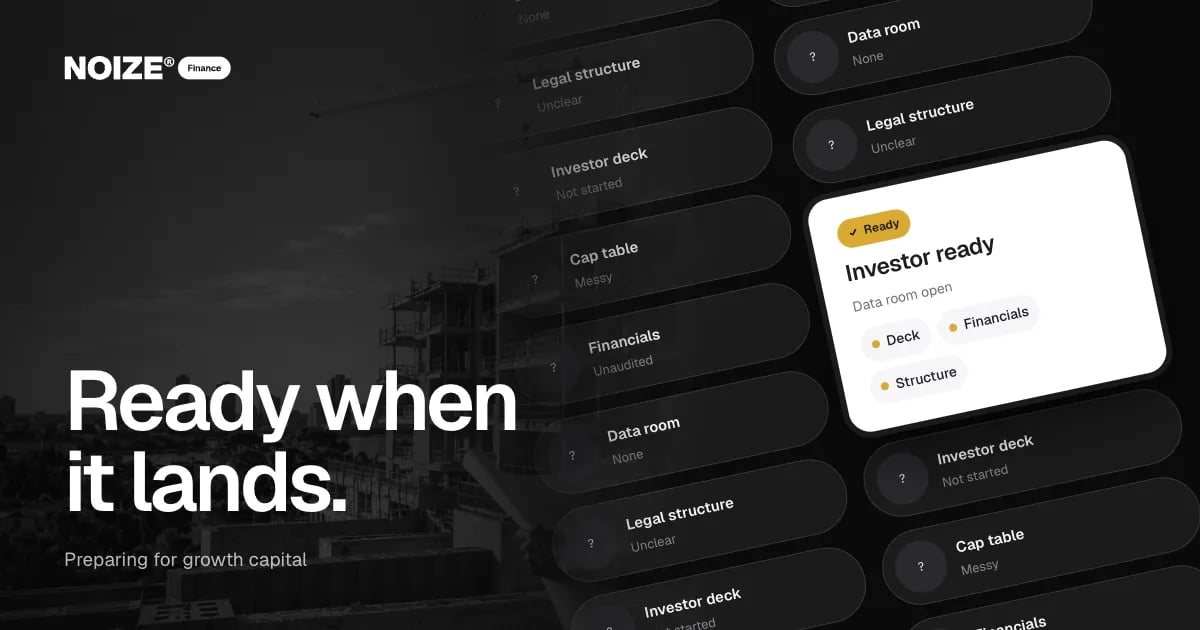
Before choosing a funding type, gather the essentials into one document with a cover page: a short summary, the use of funds, financial statements, current trading, BAS, debtors and a forecast. Matching funding to the job is far easier when everything is on the table.
How NOIZE Finance works with you
There is no single way we help. For some clients it is an introduction to our dedicated broker. For others it is a conversation about how to approach a lender, help structuring the information, or preparing the full funding pack with Books and Accounting. We agree what makes sense at the strategy or proposal stage, depending on the business and the opportunity.
Where to start this week
Write one sentence describing what funding would let you do, then list each item it would pay for with a cost and timing. That list is your use of funds and the starting point for a funding conversation. See finance.noize.com.au.
How Finance connects to the rest of NOIZE
Finance sits at the end of the chain, and it is strongest when the rest of the chain is in order. NOIZE Strategy defines the plan and use of funds. NOIZE Books keeps the records current. NOIZE Accounting prepares the statements and forecast. NOIZE Legal coordinates the paperwork when a deal is involved, with an appropriately qualified professional where required. Finance helps bring it all together in a way that suits the client, from an introduction to our dedicated broker to a complete, organised funding pack. When every department contributes, the business presents as what it is: well run and worth backing.
Related reading
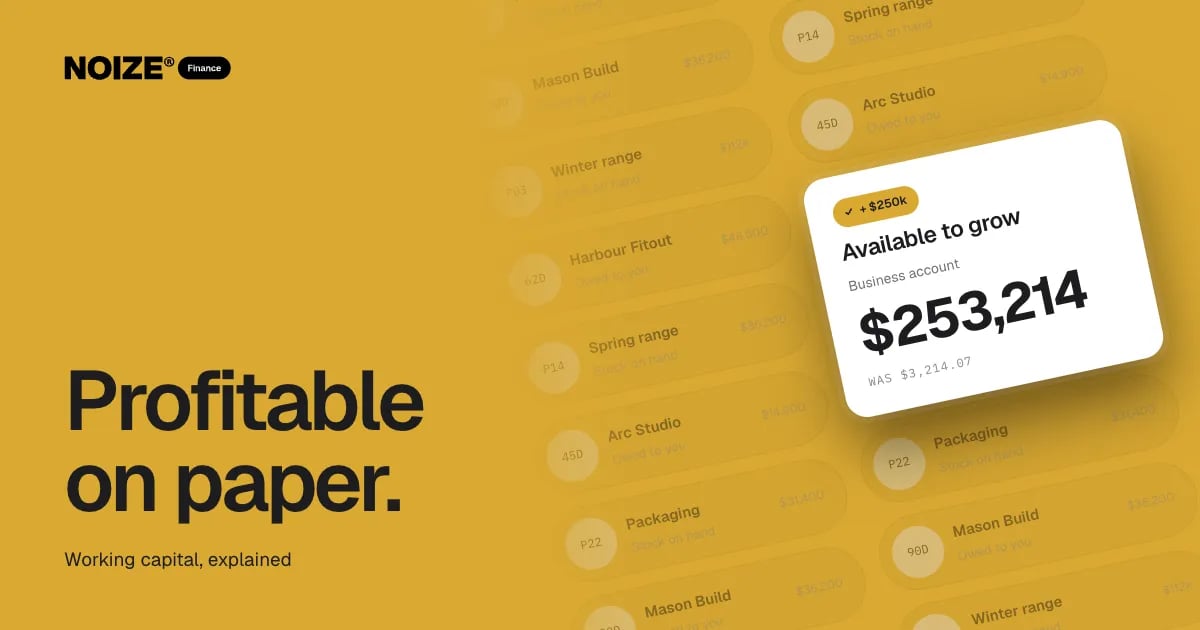
- Growth tied up in stock and receivables: working capital explained
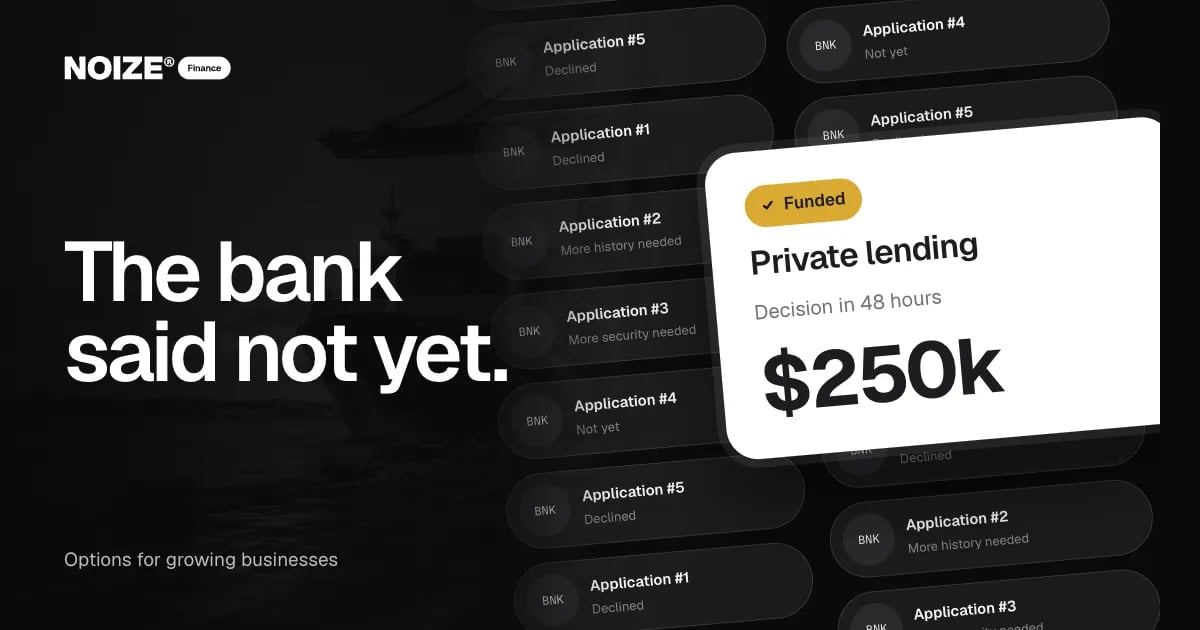
- The bank said not yet: options for growing businesses
This article is general information only. It is not legal, tax or financial advice, and it does not take your circumstances into account. Speak to a qualified adviser before acting.
NOIZE provides administrative support and business strategy. Where work is outside our skillset, or the law requires it, we make sure an appropriately qualified professional is involved.
Common questions
What types of business funding are available in Australia?
Common options include working capital, equipment and asset finance, business loans, growth capital, commercial property loans, private lending and refinancing.
What is a use of funds?
A breakdown of what borrowed money will be spent on, how much and when.
Which funding is right for my business?
It depends on the purpose, timing, amount, security and your trading history.
How quickly can business funding be arranged?
It varies by type and lender. Having numbers ready is the biggest factor in speed.
Is private lending expensive?
It is usually more expensive than bank lending but can suit time-sensitive or specific situations.
Do I need security for a business loan?
Some funding is secured against assets, some is unsecured. Options depend on the lender and situation.
Can I combine different types of funding?
Yes. Matching different needs to different funding is often more efficient.
What should I bring to a funding conversation?
What the funds are for, how much and when you need them.
Does NOIZE work with a broker?
Yes. We have a dedicated broker, and we can help however suits you, from an introduction to preparing your funding pack.
What is a funding pack?
A single, organised document with a cover page containing everything a broker or lender needs: summary, use of funds, financials, BAS, debtors, forecast and company details.
What should a funding pack cover page include?
The business name, the amount and purpose of the request, a one-paragraph summary and a contents list.
Can we update the funding pack for future applications?
Yes. Keeping it current means the next application can go out quickly.
Your first strategy conversation is on us.
Have a chatThe brand for business.