Growth tied up in stock and receivables: working capital explained
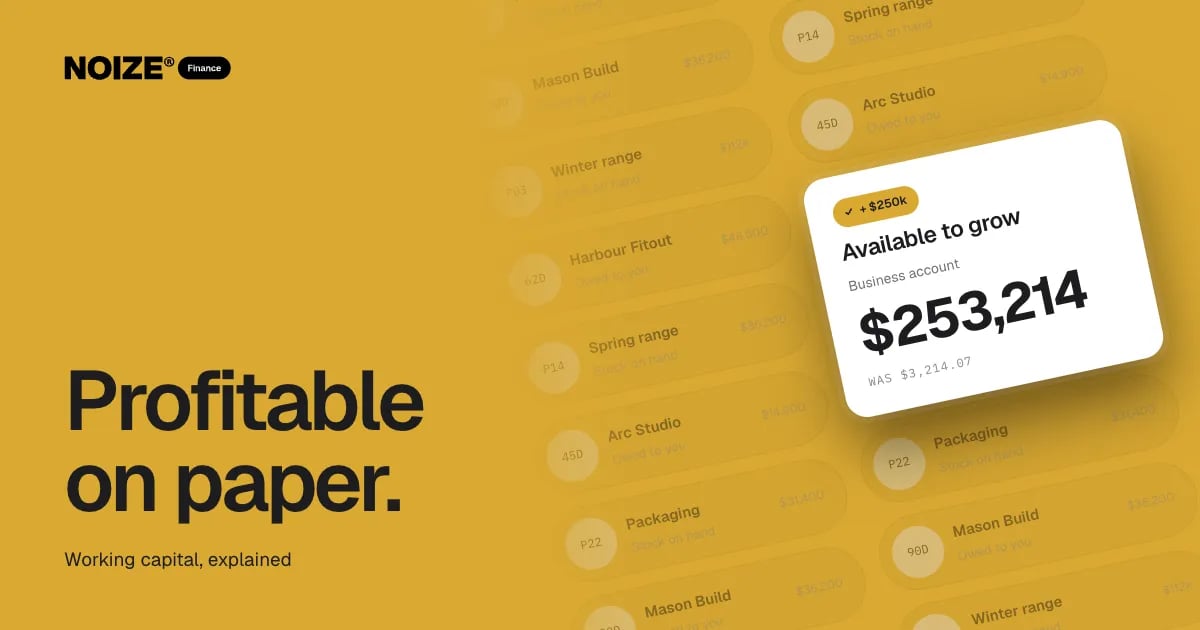
The profit and loss looks healthy. Sales are up. Margins are good. Yet the bank balance is $3,214 and payroll is on Thursday. Harbour Fitout owes $48,500 and is sixty-two days late. There is $86,200 of stock in the warehouse. Another $36,200 is owed by a customer at ninety days.
Growth is tied up in stock and receivables. It is one of the most common and least understood problems in growing businesses: profitable on paper, short of cash in practice.
The short version
- Working capital is the cash a business needs to cover the gap between paying for things and being paid.
- Growth widens that gap, because more sales mean more stock and more money owed.
- Working capital finance, such as invoice finance, trade finance and overdraft or line-of-credit facilities, releases cash tied up in the business so it can keep growing.
- Better collections and payment terms help too.
- NOIZE provides administrative support and business strategy.
- Where work is outside our skillset, or the law requires it, we make sure an appropriately qualified professional is involved.
Why profitable businesses run short of cash
01Customers pay later than suppliers
You pay suppliers in thirty days, customers pay you in sixty or ninety.
02Stock comes before sales
Stock must be bought, stored and sometimes paid for months before it sells.
03Growth amplifies the gap
The faster the business grows, the more cash is tied up in stock and debtors.
04Tax and lumpy costs
BAS, income tax and annual expenses arrive in large payments.
Working capital options
01Invoice finance
Borrowing against unpaid invoices, so you receive most of the value soon after invoicing.
02Trade finance
Funding to pay suppliers for stock, repaid when the stock sells.
03Line of credit or overdraft
A facility you draw on when needed and repay when cash comes in.
04Short-term business loans
For specific timing gaps or seasonal needs.
Improving working capital without borrowing
- Invoice promptly. Send invoices as soon as work is done.
- Tighten collections. Follow up overdue accounts consistently.
- Review payment terms. Ask for deposits, shorten customer terms or negotiate longer supplier terms.
- Manage stock. Reduce slow-moving stock and order closer to demand.
NOIZE Books manages accounts receivable and payable, and NOIZE Accounting forecasts cash so pinch points are visible early.
> I've built ecommerce businesses where our best months for sales were our worst months for cash, because we had to buy stock for the next peak. A working capital facility sized to that gap turned growth from a source of stress into something we could plan for.
“Things really got moving beyond our expectations.”
An illustrative example
Picture a wholesaler turning down orders because cash is tied up in stock and slow-paying customers. A working capital facility sized to the gap, combined with tighter collections, releases cash to accept larger orders and negotiate better supplier prices. Cash pressure eases and growth continues.
Mistakes to avoid
- Don't use long-term debt to solve a short-term timing gap.
- Don't ignore collections. Finance should complement better practices, not replace them.
- Don't wait until payroll is at risk to arrange a facility.
Build a funding pack
Working capital applications live or die on detail. A lender wants to see debtor ageing, stock levels, supplier terms and cash flow, all at once.
Present them together in a labelled funding pack with a cover page and contents list. A broker can then explain the timing gap clearly, and the lender can size a facility to it without a week of follow-up questions.
How NOIZE Finance works with you
The arrangement is shaped around each client. For others it is a conversation about how to approach a lender, help structuring the information, or preparing the full funding pack with Books and Accounting. We agree what makes sense at the strategy or proposal stage, depending on the business and the opportunity. For some clients it is an introduction to our dedicated broker.
Questions to ask about your working capital
- How much cash is tied up in money owed to us?
- How long do customers take to pay, compared with how long we take to pay suppliers?
- How much stock do we hold, and how fast does it sell?
- When are our biggest tax and annual payments due?
- Have we turned down work because of cash?
The answers show the size of the gap and the right way to close it.
Where to start this week
Add up what customers owe you, what stock you hold and what you owe suppliers. Compare it with your bank balance. The difference shows how much cash your growth has tied up. See finance.noize.com.au and books.noize.com.au.
How Finance connects to the rest of NOIZE
This is where the wider NOIZE group makes a difference. NOIZE Books keeps the records current. NOIZE Accounting prepares the statements and forecast. NOIZE Legal coordinates the paperwork when a deal is involved, with an appropriately qualified professional where required. Finance helps bring it all together in a way that suits the client, from an introduction to our dedicated broker to a complete, organised funding pack. When every department contributes, the business presents as what it is: well run and worth backing. NOIZE Strategy defines the plan and use of funds.
Related reading
- Capital for the next move: matching funding to a clear use of funds
- The bank said not yet: options for growing businesses
This article is general information only. It is not legal, tax or financial advice, and it does not take your circumstances into account. Speak to a qualified adviser before acting.
NOIZE provides administrative support and business strategy. Where work is outside our skillset, or the law requires it, we make sure an appropriately qualified professional is involved.
Common questions
What is working capital?
The cash a business needs to fund day-to-day operations, including the gap between paying suppliers and being paid by customers.
What is invoice finance?
Funding secured against unpaid invoices, providing cash before customers pay.
Why is my profitable business short of cash?
Usually because cash is tied up in stock, debtors or timing differences between payments.
What is trade finance?
Funding to pay suppliers for goods, repaid when the goods are sold.
Is a line of credit better than a loan?
For uneven or recurring needs, a line of credit can be more flexible.
How can I improve cash flow without borrowing?
Invoice promptly, follow up overdue accounts, review payment terms and manage stock levels.
How much working capital do I need?
A cash-flow forecast shows the gap and the size of facility that suits it.
What do lenders need for working capital finance?
Usually financial records, debtor and creditor reports and evidence of trading.
Does NOIZE work with a broker?
Yes. We have a dedicated broker, and we can help however suits you, from an introduction to preparing your funding pack.
What is a funding pack?
A single, organised document with a cover page containing everything a broker or lender needs: summary, use of funds, financials, BAS, debtors, forecast and company details.
Can working capital finance help seasonal businesses?
Yes. Facilities can be drawn before busy periods and repaid as sales come in.
How long does a funding pack take to prepare?
With current books, often days. It takes longer if records need catching up first.
What should a funding pack cover page include?
The business name, the amount and purpose of the request, a one-paragraph summary and a contents list.
Your first strategy conversation is on us.
Have a chatThe brand for business.